
If you’re trying to get your website to finally show up on page one, you’ve probably come across 3 Months to No.1: The “No‑Nonsense” SEO Playbook for Getting Your Website Found on Google. It promises a clear, step‑by‑step plan without fluff—a tempting proposition when you’re juggling content, keywords, and technical fixes. In this review, you’ll see how this playbook stacks up against other popular SEO guides on clarity, practicality, and the kind of results you can realistically expect, so you can pick the approach that suits your goals and time frame.
SEO playbooks and handbooks have evolved a lot since the early days of keyword stuffing and shady link tricks. As Google’s algorithms matured, the best guides shifted toward sustainable strategies—technical foundations, search intent, content quality, and authority building—packaged into actionable checklists and timelines. Owning a solid SEO guide gives you structure, saves you from guesswork and outdated myths, and helps you prioritize what actually moves the needle. In the next sections, you’ll look in more detail at each one we selected—starting with 3 Months to No.1—so you can compare their methods, tools, and value for your specific situation.
3 Months to Number 1: No-Nonsense SEO Guide to Get Your Website Found on Google (Paperback)
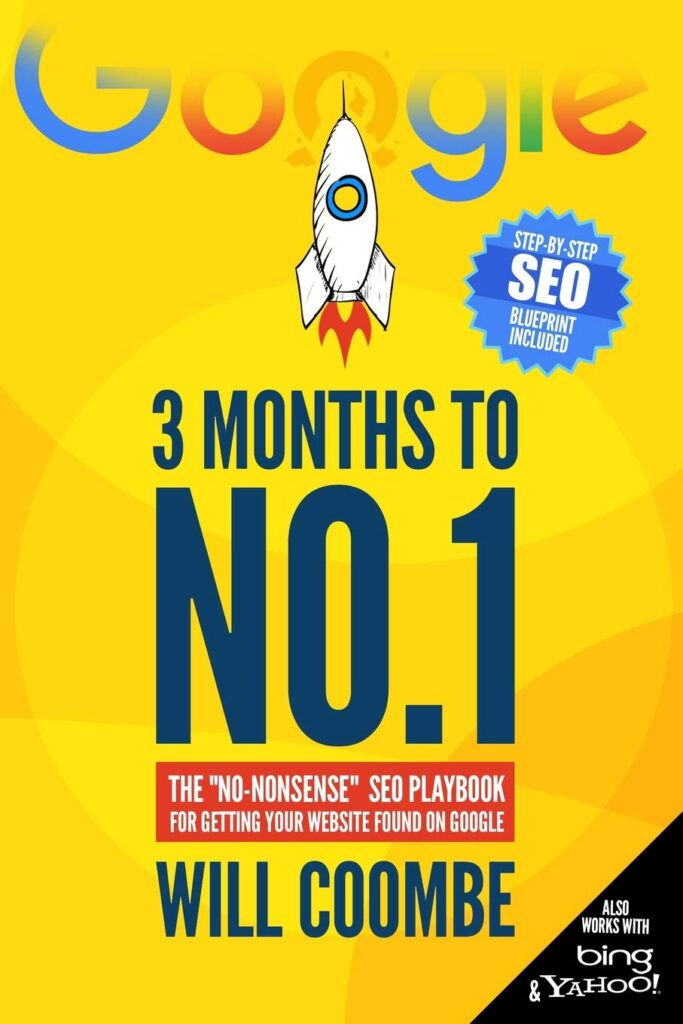
This image is property of Amazon.com.
If you want a clear, step-by-step plan to get your site ranking on Google without drowning in jargon, 3 Months to No.1: The “No-Nonsense” SEO Playbook is designed for you. Its primary use is to guide you through a focused 12‑week program that shows you exactly what to do each week to improve your search engine rankings, increase organic traffic, and generate real business outcomes like leads, sales, and bookings.
You’ll find it especially useful if you fit into any of these situations:
- You run a small business or you’re a solo founder and you need a simple blueprint to start getting found on Google fast.
- You’re a content creator or blogger who wants to build a consistent content strategy that targets the right keywords and grows your audience.
- You’re launching a new website and you want to avoid mistakes that can slow your SEO progress for months.
- You’re managing a local business and you need a focused plan for local SEO—think Google Business Profile (formerly Google My Business), reviews, and citations—to drive foot traffic and calls.
- You’re an eCommerce owner looking to rank product and category pages with solid on-page SEO, technical SEO foundations, and a realistic approach to link building.
- You work in marketing and want a crash course to align your team around a shared SEO roadmap and KPIs.
What sets this book apart is that it doesn’t ask you to memorize theory. Instead, it gives you pragmatic weekly tasks so you can move from “Where do I even start?” to “Here’s my priority list for this week.” You’ll learn how to:
- Identify and prioritize keywords that match buyer intent.
- Structure pages for on-page SEO with titles, meta descriptions, headers, and internal linking that actually help you rank.
- Tweak your site’s technical basics to improve crawlability, site speed, mobile-friendliness, and indexation.
- Publish and optimize content in a way that serves both users and search engines.
- Build relevant backlinks with outreach strategies and ethical methods that stand the test of time.
- Track progress using Google Analytics and Google Search Console so you can prove what’s working.
The “3 Months” framing matters. You’re not promised overnight magic; you’re given a timeline that’s ambitious yet achievable if you follow through. For a brand-new domain, you may see initial improvements rather than page-one dominance, and for established sites, you can often unlock “quick wins” faster. Either way, the book’s primary use is to give you direction, momentum, and structure.
If you’ve ever felt that SEO is overwhelming because there are too many moving parts—keywords, content, links, technical, analytics—this playbook consolidates the chaos into a neat, no-fluff sequence. You don’t have to be a developer or an “SEO wizard” to use it. You just need the willingness to take consistent weekly actions and measure outcomes.
The book is also well-suited for:
- Side hustlers who need lean SEO tactics that don’t require big budgets.
- Agencies onboarding junior team members who need a foundational training asset.
- Nonprofits and educators seeking strategies that respect resource constraints.
In short, the primary use of this book is to turn your loosely defined goal—“rank higher on Google”—into a prioritized, time-tested plan that you can implement immediately, track responsibly, and adjust intelligently.
You’ll probably find this book refreshing because it treats SEO like a practical craft rather than an abstract science. Here’s why it stands out:
- Action-first structure: You get a week-by-week plan. Every chapter is crafted so you know what to do next—no more analysis paralysis. It’s perfect if you’ve been stuck in research mode and need to start executing.
- No-nonsense language: The tone is direct and friendly, with minimal jargon. When technical issues come up—like sitemaps, robots.txt, or canonical tags—you get explanations you can understand and apply, not just definitions.
- Balanced approach: You’re not pushed to spam backlinks or churn out thin content. Instead, you’re guided to build a foundation through keyword research, on-page SEO, technical SEO, and ethically earned links.
- Sensible expectations: While the title is bold, the advice is realistic. If you’re launching a fresh domain, you’ll likely see meaningful progress within the 3‑month window, and the book acknowledges that established sites can accelerate results. It gives you a timeframe that helps you stay motivated without overselling miracles.
- Practical tooling: Where tools are recommended, you’re nudged to start with free or low-cost options—like Google Search Console, Google Analytics, and the Google Keyword Planner—before upgrading to paid tools if you need them.
- Measurement emphasis: You get consistent reminders to measure and iterate. You’ll set up tracking, define KPIs, and learn to interpret what your analytics are telling you, which is crucial for any SEO strategy.
- Real-world examples: The book draws on examples you can relate to—service businesses, blogs, stores—so you can translate ideas into your niche without confusion.
- Friendly coaching vibe: It feels like a knowledgeable mentor walking you through each step. If you’re a self-starter who appreciates accountability, the weekly cadence will keep you moving.
Beyond the structure, the mindset taught here is valuable. You’re encouraged to think about search intent, to focus on user experience, and to create content that deserves to rank. You’re coached to build authority in your niche without resorting to shortcuts that could backfire later.
Another reason this playbook earns trust is its timelessness. While some tools and Google features evolve (for example, Core Web Vitals, GA4, and Helpful Content updates are newer developments), the core pillars—serving user intent, structuring pages properly, fixing technical SEO issues, and earning reputable links—remain constant. The book arms you with durable principles and a workflow you can adapt as algorithms and platforms change.
Lastly, you’ll appreciate how it reduces overwhelm. Instead of scattering your attention across 50 “best practices,” it narrows your focus to the few actions that create leverage: the right keywords, the right pages, and the right links. It respects your time and gets you building momentum fast.
The purpose of 3 Months to No.1 is simple: give you a straightforward SEO framework you can apply over 12 weeks to earn more visibility on Google, drive organic traffic, and convert that traffic into real outcomes. It removes guesswork by mapping out what to research, create, optimize, and measure—week by week.
Here are the key elements you’ll work through:
- Goal setting and baselines:
- Define your business objectives and align them with SEO targets: rankings for priority keywords, organic sessions, conversions, and revenue.
- Set up tracking in Google Analytics and Google Search Console so you can measure improvements. You’ll benchmark current rankings, top pages, and click-through rates (CTR).
- Keyword research that prioritizes intent:
- Identify high-impact keywords that match your offerings. You’ll pay attention to search intent (informational, transactional, navigational) so your content meets expectations.
- Map keywords to specific pages, a process often called keyword mapping, so each page targets a clear theme without cannibalizing others.
- Tools like Google Autocomplete, People Also Ask, and competitor pages will help you discover topics and synonyms.
- On-page SEO fundamentals:
- Craft compelling title tags and meta descriptions that improve CTR while reflecting keyword targets.
- Use H1–H3 headers to structure content for readability and relevance.
- Clean up URL slugs to be descriptive and concise.
- Strengthen internal linking to distribute authority and help Google understand your site’s architecture.
- Optimize images with descriptive filenames and ALT text for accessibility and context.
- Add schema markup where appropriate (for products, FAQs, reviews) to enhance rich results—even if the original edition doesn’t dive deeply into schema, the framework encourages structured clarity that schema supports.
- Technical SEO essentials:
- Ensure mobile-friendliness with responsive design and avoid intrusive interstitials.
- Improve site speed by compressing images, caching assets, and minimizing render-blocking scripts. Even though the book predates Core Web Vitals, the practices align closely with the performance mindset you need today.
- Create and submit an XML sitemap and maintain a clean robots.txt so search engines can crawl and index efficiently.
- Fix broken links, redirect properly (301, not 302), and consolidate duplicate content with canonical tags.
- Migrate to HTTPS if you haven’t already, for security and trust signals.
- Content strategy that compounds:
- Plan cornerstone content (sometimes called “pillar pages”) that thoroughly covers a topic, then support it with related articles that interlink naturally.
- Address search intent in every post—what problem is your reader trying to solve, and what action do you want them to take?
- Maintain a publish/refresh calendar to keep content current, which helps with ongoing relevance and rankings.
- Ethical link building:
- Identify relevant sites to pitch for guest posts, resource pages, or collaborations.
- Use broken link building and legitimate directory/citation listings (especially for local businesses).
- Avoid manipulative schemes. The book urges you to pursue backlinks that make sense both for users and for Google.
- Local SEO (if applicable):
- Claim and optimize your Google Business Profile with accurate NAP (Name, Address, Phone) and compelling photos.
- Encourage and manage reviews, responding to build trust.
- Build consistent citations across reputable directories.
- Create location pages and local content that answers neighborhood-specific questions.
- Measurement and iteration:
- Track keyword movement, page performance, CTR, and conversions. You’ll learn to diagnose whether growth is coming from content, links, or technical fixes.
- Double down on what’s working and prune what’s not, using Search Console data to spot quick wins (e.g., pages stuck on positions 5–15 that need better titles, more internal links, or additional depth).
A week-by-week cadence gives you manageable wins. For example:
- Week 1–2: Set up tracking, audit your site, research and map keywords.
- Week 3–4: Rework your core pages with better on-page SEO and internal links.
- Week 5–6: Build a content schedule and publish your first batch of intent-aligned posts.
- Week 7–8: Address technical SEO issues and enhance site speed and mobile UX.
- Week 9–10: Begin outreach for backlinks and clean up citations.
- Week 11–12: Review metrics, refine pages lagging just off page one, and plan your next 90 days.
You’ll walk away with a replicable playbook. That means you can run the program again every quarter, using performance data to target harder keywords, deeper content angles, and stronger links.
You’ll also appreciate how the book contextualizes effort. It helps you prioritize high-impact pages over low-leverage tasks. For instance, instead of tweaking dozens of blog posts, you might find that optimizing five revenue-generating landing pages and building a handful of high-quality backlinks moves the needle far more.
While the paperback was released in 2017, the core structure still maps beautifully to modern SEO. You’ll just want to adapt a few items to the current landscape:
- Use GA4 instead of Universal Analytics.
- Pay attention to Core Web Vitals (Largest Contentful Paint, First Input Delay/Interaction to Next Paint, Cumulative Layout Shift) under the book’s broader “site speed and UX” mindset.
- Monitor Helpful Content and E‑E‑A‑T signals by creating expert-backed, experience-rich content with clear authorship and sources.
- If you use AI tools, maintain high editorial standards and unique insights.
Think of this book as your foundational process: research, structure, publish, promote, and measure—then repeat with sharper focus each cycle.
From a quality standpoint, you’ll find this playbook clear, focused, and practical. It’s written with an accessible tone that keeps you engaged and moving forward. The organization is its greatest asset; it leads you logically from setup to strategy to measurement, and every chapter feels like a task list disguised as a friendly lesson.
Strengths you’ll notice:
- Clarity of instruction: You’ll never wonder what to do next. The language avoids buzzwords and delivers steps you can execute without an SEO background.
- Battle-tested fundamentals: The strategies emphasize durable SEO principles. That’s why the book continues to be useful even years after publication.
- Mindset development: You’re not just handed tactics—you’re taught to think in terms of user value, intent alignment, and compounding gains, which are critical for long-term success.
Potential limitations to keep in mind:
- Tooling references age: Because the printed edition predates GA4 and Core Web Vitals, you’ll need to translate some instructions to today’s tools and dashboards. If you’re comfortable with adapting, this won’t slow you down.
- Competitive niches vary: In ultra-competitive spaces, a 3‑month window may only set the stage for longer campaigns. The book frames a fast start, not a finish line for every industry.
- Outreach nuance: While link-building guidance is ethical and practical, outreach success always depends on your execution and your niche’s dynamics. You’ll still need persistence and personalization to earn quality backlinks.
Production-wise, the writing is crisp and the pacing is kind to busy schedules. It’s a comfortably digestible read that you can annotate and refer back to during implementation. The weekly structure provides a built-in accountability system—helpful if you tend to procrastinate or get sidetracked by shiny new tactics.
Quality is also evident in how it helps you avoid common pitfalls:
- It warns against keyword stuffing and encourages natural, helpful content.
- It pushes you to fix technical SEO basics rather than gloss over them.
- It shows you how to prioritize pages based on impact rather than chasing vanity metrics.
If you value a straightforward plan that respects your time and doesn’t sugarcoat the effort required, you’ll judge the overall quality as high. You get a practical education and a roadmap that works for solo operators, small teams, and even larger organizations that want to tighten execution.
- Actionable 12‑week plan: You’re given a precise, week-by-week sequence that helps you implement SEO without confusion or delay.
- Beginner-friendly, expert-useful: Whether you’re brand-new or brushing up, the book handles fundamentals thoroughly while providing a strategic lens you can scale.
- Focus on high-impact basics: Strong emphasis on keyword research, on-page SEO, technical SEO, and ethical link building—the pillars that reliably move rankings.
- Clear measurement steps: You set up Google Analytics and Google Search Console, define KPIs, and track progress so you can demonstrate ROI.
- Realistic mindset: Encourages steady, strategic work instead of gimmicks. It keeps you focused on user intent, quality content, and site health.
- Great for local businesses: Practical guidance on Google Business Profile, reviews, and citations helps you win local visibility.
- Budget-conscious: You’ll learn how to get results using free or low-cost tools before deciding whether to invest in premium platforms.
- Adaptable framework: The process remains valid even as algorithms shift. You can easily layer in modern considerations like Core Web Vitals, GA4, and E‑E‑A‑T.
- Dated tool screenshots/instructions: Since the paperback dates to 2017, you’ll need to translate certain steps to today’s interfaces (e.g., GA4 vs. Universal Analytics).
- Timelines vary by niche: “3 months” is a productive sprint, but in highly competitive industries or with brand-new domains, you may need additional cycles for top rankings.
- Limited depth on advanced technical topics: You’ll master essentials, but if you’re dealing with complex sites (JavaScript-heavy SPAs, large eCommerce), you’ll likely need supplementary technical resources.
- Outreach is still hard work: The link-building advice is sound, yet successful outreach depends on your pitch quality and persistence—no book can shortcut that.
- Not a substitute for product-market fit: SEO amplifies value; it doesn’t create it. If offers or content don’t resonate, rankings won’t solve the underlying issue.
If you’re weighing whether this playbook belongs on your desk, ask yourself what you need most right now: a simple, disciplined routine that gets you executing on SEO basics with confidence. If that resonates, this book is a strong choice. You’ll appreciate how it strips away fluff, gives you a roadmap you can follow immediately, and instills the discipline to keep improving long after the initial 12 weeks.
And as you adapt it to today’s search landscape, keep these quick upgrades in mind:
- Treat mobile UX and site speed as core priorities—use PageSpeed Insights and Lighthouse to guide improvements.
- Map your content to search intent and demonstrate experience and expertise (E‑E‑A‑T) with author bios, references, and real-world examples.
- Use GA4 events and conversions to tie organic traffic to business results.
- Monitor Search Console queries and CTR to identify quick wins—rewrite titles/meta for pages ranking on page two.
- Invest in a repeatable internal linking process. It’s one of the fastest ways to lift relevant pages.
Follow the playbook, measure honestly, and iterate. You’ll build an SEO engine that compounds over time—without needing to become a full-time specialist or chase every trend.
Comparison Overview
Since you’re looking at just one title—3 Months to No.1: The “No-Nonsense” SEO Playbook for Getting Your Website Found on Google (Paperback, September 11, 2017)—this section compares what the book promises and delivers against your likely needs and common alternatives (courses, blogs, and newer SEO guides). The bottom line: you get a structured, week-by-week plan that’s beginner-friendly and practical, but it was published in 2017, so you’ll want to pair it with up-to-date online resources for algorithm changes and tool updates.
Key Takeaways at a Glance
- Best for you if: You want a clear, step-by-step SEO plan you can follow over 12 weeks without jargon.
- You might look elsewhere if: You need cutting-edge tactics, advanced technical SEO, or enterprise-scale guidance.
- What stands out: Actionable, no-fluff workflow you can execute; strong on fundamentals like keyword research, on-page optimization, content, and link earning.
- Watch outs: Published in 2017—core principles still apply, but some tactics and tool screenshots may be dated.
Specifications and What They Mean for You
Specs Table
| Spec | Details | What it means for you |
|---|---|---|
| Title | 3 Months to No.1: The “No-Nonsense” SEO Playbook for Getting Your Website Found on Google | A practical, execution-focused roadmap rather than theory-heavy reading. |
| Author | Will Coombe | Written by a practitioner; tone is direct and action-oriented. |
| Format | Paperback | Easy to mark up and use as a desk reference while you implement. |
| Publication Date | September 11, 2017 | Fundamentals hold up, but complement with current SEO news for changes since 2017. |
| Intended Level | Beginner to Intermediate | You don’t need prior SEO experience; still useful if you’ve dabbled. |
| Structure | 12-week, step-by-step plan | You get a clear weekly cadence that keeps you moving. |
| Core Topics | Keyword research, on-page SEO, technical basics, content strategy, link earning, local SEO, analytics | Covers the essentials you need to rank and measure progress. |
| Teaching Style | No-nonsense, checklist-driven, practical tasks | You can implement as you read; minimal fluff. |
| Time Investment | Moderate (plan for steady weekly action) | Manageable for busy owners/marketers if you block time each week. |
| Ethical Approach | White-hat, sustainable tactics | Reduced risk of penalties; focuses on long-term results. |
| Tools Assumed | Common SEO tools (e.g., Google Search Console, Google Analytics) | You’ll use widely available, often free tools. |
| Best For | Small businesses, bloggers, freelancers, in-house generalists | Great fit if you manage a website and wear multiple hats. |
| Less Suited For | Enterprise SEO, heavy technical/site-architecture overhauls, programmatic SEO | You’ll need deeper, specialized resources for advanced needs. |
| Outcome Expectation | “3 Months to No.1” is aspirational | Timelines vary by competition and site starting point—expect progress, not guarantees. |
Strengths vs. Limitations
Strengths
- Clear weekly roadmap that keeps you accountable.
- Strong coverage of SEO fundamentals you’ll actually use day to day.
- Friendly, no-jargon tone that helps you take action quickly.
- Emphasis on ethical, sustainable ranking approaches.
Limitations
- Published in 2017, so some examples and tool interfaces are dated.
- Limited depth on advanced technical SEO (site migrations, complex architectures).
- “No.1 in 3 months” depends heavily on niche competitiveness and your execution.
How It Compares to Common Alternatives
Versus Online Courses
- You get a cohesive, end-to-end plan in book form (less hopping around).
- Courses may be more up-to-date with algorithm changes and tool UIs.
- If you prefer structured reading over video, this book fits your style.
Versus Blogs/YouTube
- Less fragmented: you follow one consistent methodology.
- Blogs/YouTube can be timelier but often lack a unified step-by-step workflow.
- Pair this book with a trusted SEO news source for updates.
Versus Newer SEO Books
- This one excels at actionability and clarity for beginners.
- Newer books may reflect the latest best practices (e.g., AI-assisted workflows, E-E-A-T nuances).
- If recency is critical, use this as your foundation and supplement with updated materials.
Should You Choose It?
Choose this book if:
- You want a practical, week-by-week plan you can follow without getting overwhelmed.
- You manage your own site (or a small set of sites) and need results from fundamentals.
- You prefer print you can annotate and reference as you work.
Consider alternatives or supplements if:
- You need deep technical SEO, enterprise governance, or international/large-site strategies.
- You want the very latest tactics and tool walkthroughs with current interfaces.
- You prefer interactive instruction (video, labs, or community Q&A).
Friendly Final Take
If you’re ready to roll up your sleeves and you value a clear, no-fuss plan, this book gives you a solid 12-week framework to build momentum in search. Use it to nail the fundamentals, then layer on current updates from reputable SEO sources to keep your strategy fresh.
Conclusion on “3 Months to No.1: The ‘No-Nonsense’ SEO Playbook for Getting Your Website Found on Google”
The Bottom Line
If you want a clear, step-by-step plan to improve your site’s visibility, this playbook gives you a practical roadmap. You’ll learn how to research keywords, optimize pages, build content that earns links, and track results—all in an approachable, no-fluff style. The 90-day structure helps you turn SEO from a vague goal into a weekly checklist you can actually follow.
Potential Drawbacks
- The book was published in 2017, so some tools, screenshots, and minor tactics may feel dated.
- Google’s algorithms have evolved; timelines like “3 months” can be ambitious depending on your niche, competition, and site history.
- Advanced technical SEO and enterprise-level challenges aren’t covered in great depth.
- A few examples may feel region-specific or simplified if you’re already intermediate.
Who It’s Best For
- You’re a small business owner, solo founder, blogger, or marketer new to SEO who wants a proven, actionable starting point.
- You prefer checklists and weekly milestones over dense theory.
- You need a structured plan to go from zero to consistent SEO habits.
If you already have solid SEO experience, you’ll still find useful reminders and a tidy framework, but you may want to pair it with up-to-date resources on technical SEO, E-E-A-T, structured data, and content velocity.
Final Recommendation
You should pick this up if you’re looking for a friendly, practical primer that gets you moving fast. Use it as your foundation, then supplement with current best practices and tool updates to account for changes since 2017. Follow the plan, track your results, and you’ll build momentum—even if your journey to “No.1” takes longer than three months.⚠️ Disclosure: This post contains affiliate links. If you purchase through them, we may earn a commission at no extra cost to you. As an Amazon Associate, we earn from qualifying purchases.
🚀 Ready to start your online income journey?
Grab your free Internet Paydays Toolkit → Click Here
🛒 Looking for the best Amazon tools and gear? We’ve curated everything you need for productivity, side hustles, and content creation.
🔧 Tools We Recommend for Online Success:
- Systeme.io – Funnels, landing pages & automation
- Pictory AI – Turn scripts into faceless YouTube videos
- Creative Fabrica – Fonts, templates & design assets
- Beehiiv – Build and grow your newsletter
- Wise – Low-fee global payments
- Printify – Print-on-demand merch & fulfillment
- Beacons.ai – All-in-one “link in bio” and creator toolkit
- Carrd – Simple, beautiful one-page websites in minutes
- Google Workspace – Professional email & productivity suite
💡 Want all of these tools in one place?
Grab our free Toolkit → Click Here
Disclosure: As an Amazon Associate, I earn from qualifying purchases.