
If your interests zigzag from stagecraft to sourdough, from cockpit physics to cash-flow hacks, you’re in good company. You Can Act!: A Complete Guide for Actors promises practical guidance for sharpening your craft; the Sourdough Discard Cookbook invites you to turn kitchen “waste” into tasty, full-color wins; Aerodynamics for Naval Aviators (2025) gives you a rigorous, pilot-focused look at flight fundamentals; and AI Powered Solopreneur offers you no-code pathways to build side income without quitting your day job. Each one meets you where you are—whether you’re rehearsing, baking, briefing, or building a business—and helps you move forward with clearer steps and fewer misfires.
Books like these have long roots: performance handbooks have guided actors from the era of repertory theaters to today’s on-camera nuance; cookbooks evolved from handwritten family collections into richly visual, technique-driven companions; aviation manuals grew out of military training needs to standardize safe, effective flying; and business playbooks, once dense with jargon, now often focus on accessible, tool-based strategies you can apply right away. Owning guides like these pays off in structure and confidence—recipes that reduce waste and stretch your budget, a disciplined path to stronger performances, safer and more informed flying decisions, and practical frameworks to test income ideas without a steep tech barrier. In short, you get curated expertise that shortens your learning curve and multiplies your results.
Next, you’ll look more closely at each title—what problems it solves, how user-friendly it feels, who it suits best, and where it shines or falls short—so you can decide which one deserves a spot on your shelf, in your galley, in your flight bag, or on your Kindle.
You Can Act!: A Guide for Actors

This image is property of pixabay.com.
If you’re building a toolkit for stage or screen, You Can Act!: A Complete Guide for Actors gives you a practical roadmap. It’s ideal if you’re new to the craft and want structure, or if you’re a working actor who needs reliable refreshers for audition preparation, scene work, and on-camera acting. You’ll find it especially useful if you appreciate step-by-step processes rather than abstract theory.
You’ll use this book to break down sides fast, make playable choices under pressure, and deepen character development. It helps you organize rehearsals, collaborate with scene partners, and turn nerves into fuel. Even if it predates today’s self-tape boom, the principles transfer cleanly to self-taping and callbacks.
You get immediately usable acting techniques. Instead of lofty philosophy, the book gives you clear actions, questions, and checklists you can apply to your next audition, class, or set day.
You’re guided to form choices that are emotionally alive and technically repeatable. The focus on objectives, actions, and obstacles lets you commit fully without getting stuck in vague “feelings.”
The writing is direct and encouraging. You won’t wade through academic jargon; you’ll get concrete steps that make sense at 8 a.m. before a casting office or at midnight before opening.
The book’s purpose is to translate the craft into a consistent process you can trust. Rather than leaving you to guess what “good acting” looks like, it gives you a framework: analyze, personalize, rehearse, and deliver—with room for impulse and spontaneity.
- A clear workflow for script analysis: identify the given circumstances, define your objectives and obstacles, and map the beats and tactics you’ll play moment to moment.
- Tools for emotional preparation: safe, repeatable ways to kindle stakes and authenticity without self-harm or burnout.
- Audition and cold reading strategies: how to make strong first choices, adjust quickly to notes, and show you can take direction.
- Scene partner skills: listening, responsiveness, and staying alive to the changing moment.
- Notes on monologues, genre shifts, and adapting your work for stage performance versus camera.
- Professional habits: etiquette, time management, and how to keep your instrument sharp between gigs.
The structure is clean and cumulative, making it easy to move from fundamentals (listening, circumstance, action) to advanced application (layering tactics, calibrating for camera). Chapters build logically, reinforcing concepts with examples and exercises you can try immediately. The tone is friendly but rigorous, encouraging you to work specifically and truthfully.
You’ll appreciate how actionable the checklists and prompts are. They keep you from getting lost in your head and orient you toward what you can control: tactics, behavior, and presence. It’s the kind of book you’ll dog-ear, annotate, and return to before high-stakes auditions. The guidance translates across mediums and genres, so it stays valuable as your career evolves.
- Practical process you can apply to any script, from co-star sides to Shakespeare.
- Strong emphasis on playable actions and listening, which makes your work dynamic.
- Clear audition flow: enter, connect, deliver, adjust—without overthinking.
- Helpful for both on-camera acting and theater; advice scales well between formats.
- Encourages healthy, sustainable emotional preparation rather than chasing results.
- Friendly tone that keeps you motivated and focused.
- If you’re seeking dense theory or deep dives into a single methodology, you may find the approach more pragmatic than philosophical.
- Some industry references feel era-specific; you’ll need to adapt examples to current self-tape norms and virtual callbacks.
- Actors who prefer purely improvisational discovery might resist the structured pre-work at first.
- Limited coverage of the business side beyond professionalism; you’ll still want a separate resource for marketing, agents, and contracts.
By the end, you’ll have a reliable toolkit: questions that unlock scripts quickly, actions that keep you truthful, and habits that make casting directors trust you. Whether you’re tackling your first co-star or refining a series regular, this guide helps you build repeatable excellence without losing spontaneity. If you crave clear steps, believable behavior, and choices that land, this is a worthy addition to your shelf and your set bag.
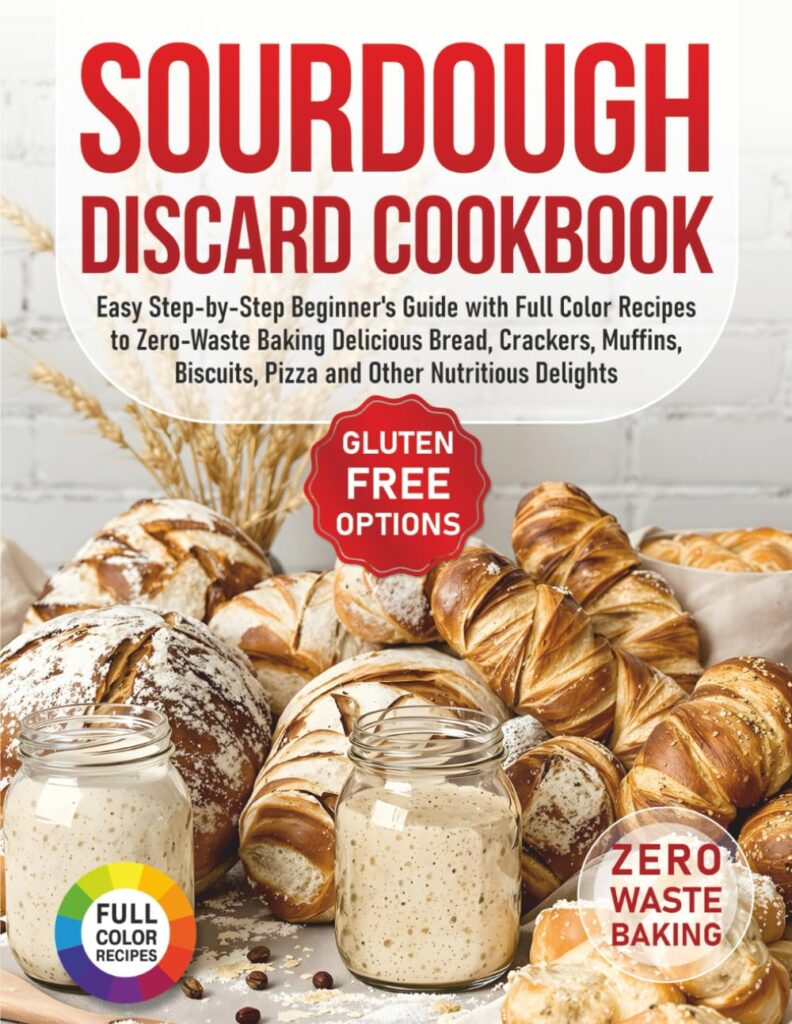
Sourdough Discard Cookbook: Beginner’s Guide to Zero-Waste Baking – Bread, Crackers, Muffins, Biscuits, Pizza & More (Paperback, April 1, 2025)
This image is property of Amazon.com.
You want to bake better, waste less, and finally figure out what to do with that cup of sourdough discard you keep tossing. The Sourdough Discard Cookbook: Easy Step-by-Step Beginner’s Guide with Full Color Recipes to Zero-Waste Baking Delicious Bread, Crackers, Muffins, Biscuits, Pizza and Other Nutritious Delights (Paperback – April 1, 2025) is designed for home bakers who value Zero-Waste Baking, crave approachable instructions, and love Full-Color Recipes that show you exactly what success looks like. Whether you’ve just started your sourdough starter or you’re a seasoned baker drowning in discard, this book is your practical companion.
Its primary purpose is to transform leftover discard into everyday favorites—think bread, crackers, muffins, biscuits, pizza, and more—without guesswork. You’ll build confidence through Step-by-Step directions while learning techniques that make your baking routine more nutritious, budget-friendly, and sustainable.
If you’ve ever grimaced while pouring good starter down the drain, you’ll appreciate how this book reframes discard as an ingredient. It turns a problem into possibilities, helping you stretch your pantry and create flavor-packed results that don’t feel like compromise.
You get simple, friendly guidance paired with full-color photos. That matters because visual cues—dough texture, crumb, doneness—can make or break your bake. The layout and tone encourage you to try new recipes on a weeknight, not just on a long weekend.
We like that the recipes go beyond bread: savory snacks, sweet treats, and quick weeknight pizza make it easy to weave discard into your regular cooking. You’ll use your starter more often and keep your oven busy without marathon prep sessions.
- Help you adopt Zero-Waste Baking habits with your sourdough discard
- Demystify techniques through a Beginner’s Guide structure
- Make recipes approachable with Step-by-Step instructions and Full-Color visuals
- Expand your repertoire from bread to crackers, muffins, biscuits, pizza, and other nutritious bakes
- Clear step-by-step workflows: Each recipe walks you from starter status to finished bake with timing, texture cues, and practical substitutions.
- Full-color photography: Photos highlight dough stages and finished results, giving you confidence at every milestone.
- Zero-waste focus: Smart ways to integrate discard into everyday recipes so you can bake more and throw away less.
- Flexible scheduling: Options for same-day bakes and overnight rests help you fit baking around real life.
- Flavor-forward variations: Herbs, cheeses, whole grains, spices, and seasonal twists make your bakes feel new without extra fuss.
- Troubleshooting tips: Simple guidance for common issues—overproofing, dense crumb, underbaked centers, and too-sour flavor.
- Quick items: pancakes, waffles, scones, biscuits, and muffins to use up discard fast
- Savory staples: crackers, flatbreads, pizza with crisp edges and tangy depth
- Comfort bakes: everyday sandwich bread, snackable pretzels, and breakfast-friendly loaves
- Sweet treats: brownies, banana bread, and snack cakes that benefit from the tenderizing effect of discard
You’ll likely appreciate the clean structure: start with fundamentals (how discard works, how hydration affects dough), then move into recipes grouped by time and difficulty. The friendly tone and consistent formatting make it easy to scan for what you need—prep time, rise time, substitutions—before you preheat the oven. The Full-Color Recipes do more than look pretty; they serve as a checklist for texture, rise, and color.
Because discard adds mild acidity and moisture, well-tested recipes matter. The book focuses on practical, repeatable outcomes. Expect cues like “dough should feel silky, not tacky” and “edges should be deeply golden” so you can learn by feel, not just by timer. That kind of detail improves consistency across ovens, flours, and climates.
If you’re feeding a starter weekly, using discard efficiently saves money and reduces guilt. The April 1, 2025 Paperback format suggests a kitchen-friendly, durable book you won’t mind flour-dusting. As your skills grow, you’ll still reach for the flavor variations and technique notes.
- Zero-Waste Baking focus helps you use every bit of your sourdough discard
- Step-by-Step directions reduce guesswork for beginners
- Full-Color photos provide reliable visual checkpoints
- Wide range of recipes: bread, crackers, muffins, biscuits, pizza, and more
- Flexible timing for weeknight or weekend baking
- Practical troubleshooting and substitution ideas
- Encourages flavor experimentation without complexity
- If you don’t keep an active sourdough starter, you won’t benefit as much
- Experienced bakers may want more advanced fermentation science
- Some recipes may rely on pantry staples (e.g., specialty flours) you might not have on hand
- Managing discard volume still requires planning around feeding schedules
If you’re ready to turn your sourdough discard into everyday wins, this Beginner’s Guide offers the structure, visuals, and flavor ideas you need. You’ll bake with confidence, waste less, and bring more nutritious goodness to your table—one step-by-step, full-color recipe at a time.
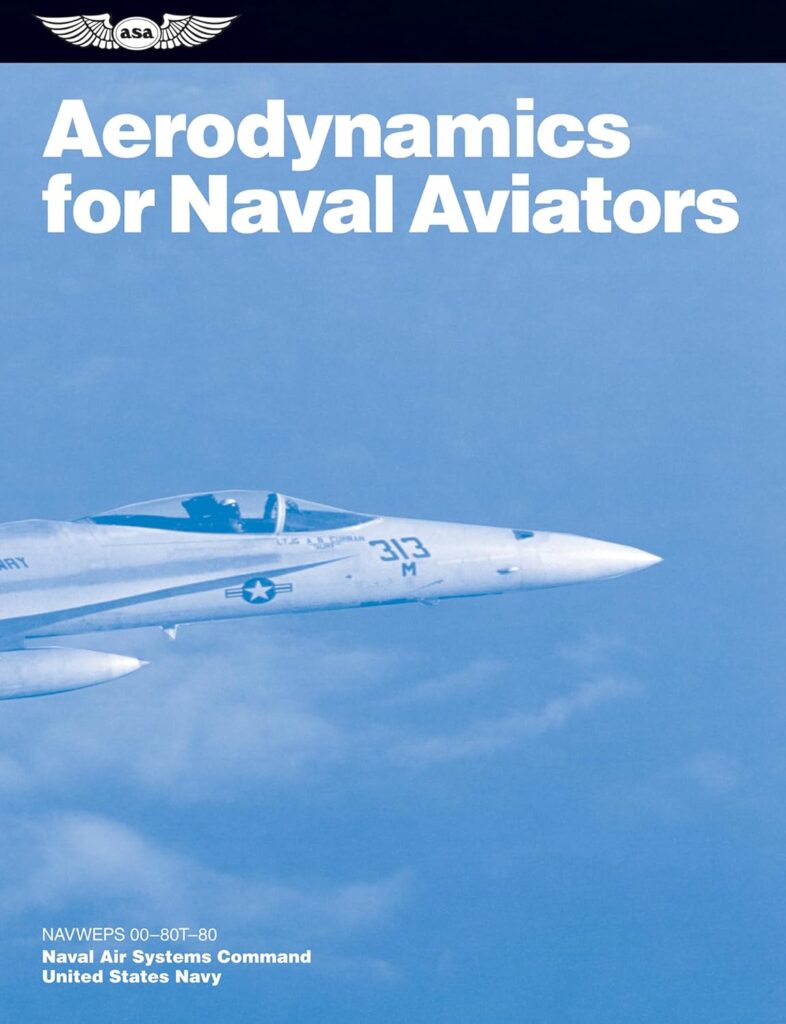
Aerodynamics for Naval Aviators, 2025 Revised Edition (NAVWEPS 00-80T-80, ASA FAA Handbook)
This image is property of Amazon.com.
If you’re a pilot, instructor, engineering student, or a serious sim flyer who wants a rigorous but approachable grasp of aircraft behavior, Aerodynamics for Naval Aviators (2025): NAVWEPS 00-80T-80 (ASA FAA Handbook Series) Revised Edition is your go-to. It’s ideal when you need more than a quick tip sheet—when you want to understand why your airplane does what it does at the edge of its envelope. You’ll find it especially useful if you operate high-performance or swept‑wing aircraft, or if you’re fascinated by carrier operations, high angle-of-attack handling, and energy management.
You’ll use this handbook to prep for checkrides and type transitions, to brief complex flights, and to troubleshoot performance or handling issues. It shines in contexts like:
- Evaluating lift, drag, and stability trade-offs for maneuvering
- Judging stall, spin, and recovery behavior
- Managing compressibility and transonic effects
- Planning approach, wave-off, and arrested landing energy states
You’ll appreciate how the book balances physics clarity with minimal calculus. Concepts like lift coefficient (CL), drag polar, V-n (V-G) diagrams, and load factor are unpacked in plain language, supported by clean illustrations. That means you can apply the knowledge in the cockpit, not just pass a test.
Unlike generic texts, this one contextualizes theory for naval aviation. You get insight on deck operations, crosswind approaches, gust response, and carrier pattern energy management. Even if you fly land-based aircraft, this perspective makes you sharper at handling high AOA, low-speed control, and asymmetric thrust scenarios.
The purpose of NAVWEPS 00-80T-80 has always been to give you a pilot-centric foundation in aerodynamics—solid enough to guide decisions when conditions get messy, yet practical enough to use under workload. The 2025 Revised Edition continues that mission, preserving the canonical explanations while presenting them for modern readers.
- Clear coverage of stability and control: static vs. dynamic stability, Dutch roll, phugoid modes, and yaw/roll coupling
- Thorough treatment of stalls, spins, and recovery techniques, including the effects of flaps, slats, and swept wings
- Practical performance topics: climb, cruise, turn performance, accelerated stalls, maneuvering speed (Va), and V-n diagrams
- High-speed phenomena: compressibility, Mach tuck, shock-induced separation, and buffet onset
- Low-speed nuances: ground effect, density altitude, gust loads, wind shear, and propeller slipstream interactions
- Weight, balance, and configuration influences on takeoff, approach, and landing
- Emphasis on energy management for carrier approaches, bolters, and wave-offs
- Accessible graphics that connect equations to real-world flying without burying you in math
This text earns its reputation through depth you can actually use. You’re not just memorizing definitions; you’re learning to predict how a change in wing loading, thrust-to-weight, or CG location alters handling and margins. The sections on transonic effects and swept-wing aerodynamics are particularly strong, giving you a reliable mental model for high-speed regimes.
Though technical, the writing is friendly to operational thinkers. Diagrams are purposeful, and the narrative builds from fundamentals to advanced topics with few gaps. You’ll find it easy to jump between chapters when you need a refresher on stability, performance, or control. The Revised Edition approach keeps the classic content intact while aiming for a cleaner reading experience.
- Strong, time-tested coverage of aerodynamics tailored to pilot decision-making
- Excellent explanations of stability and control, including Dutch roll and phugoid dynamics
- Balanced discussion of low-speed and high-speed regimes: from stall and spin to compressibility and Mach effects
- Actionable insights for carrier operations that translate to safer pattern work and go-arounds everywhere
- Minimal math, maximum clarity—ideal for pilots who want understanding without a textbook slog
- Helps you interpret V-n diagrams, maneuvering speed, and load factor limits in practical terms
- The naval focus means some examples lean toward carrier procedures, which might feel niche if you only fly GA trainers
- The writing style is authoritative and dense; you’ll get more by studying than skimming
- If you’re seeking advanced computational methods or modern CFD insights, this is a pilot’s handbook, not an engineering research text
If you want a reliable, cockpit-ready understanding of how lift, drag, stability, and control interact—especially near the edges of the envelope—Aerodynamics for Naval Aviators (2025): NAVWEPS 00-80T-80 (ASA FAA Handbook Series) Revised Edition deserves a spot on your shelf and in your flight bag. It gives you the tools to reason through abnormal behavior, to set smarter margins, and to fly with the kind of aerodynamic awareness that keeps you a step ahead.
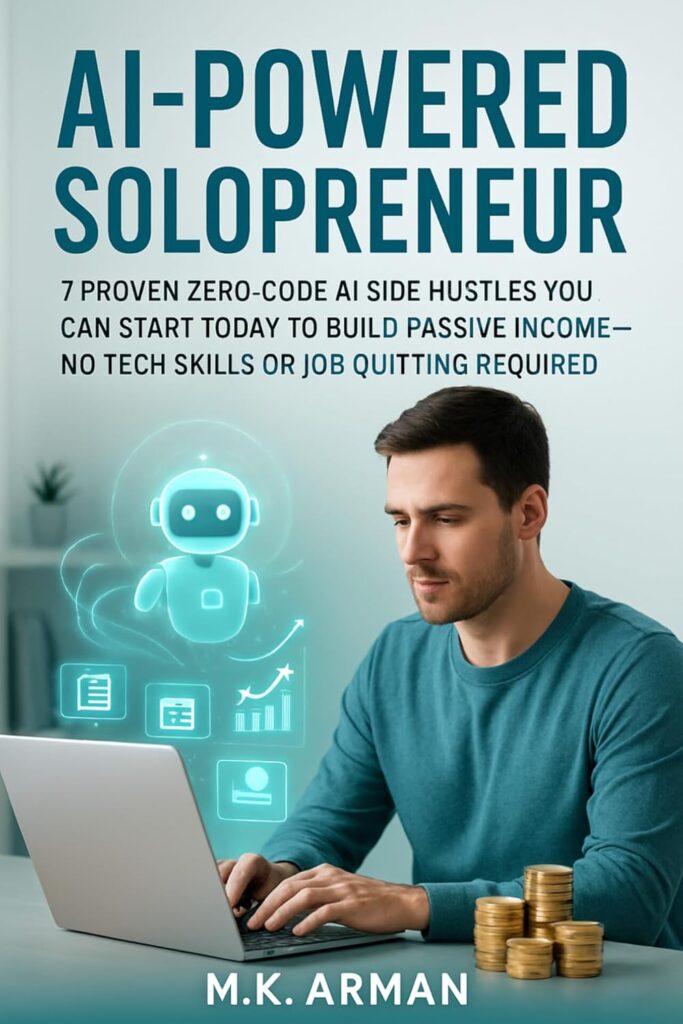
AI-Powered Solopreneur: 7 No-Code AI Side Hustles for Passive Income (Kindle Edition)
This image is property of Amazon.com.
This Kindle Edition guide, AI Powered Solopreneur, is designed for you if you want to launch AI side hustles without writing code, leaving your day job, or wading through tech jargon. The primary use is giving you a clear, repeatable path to build passive income streams using no‑code tools and practical automation. Whether you’re curious about turning ChatGPT prompts into services, creating AI-assisted content, or setting up small systems that work while you sleep, the book positions itself as your step-by-step playbook. You’re walked from idea to validation, setup, delivery, and scaling, so you can test quickly and double down on what works.
As part of our “From Acting to Aerodynamics to AI” comparison, this title fills the action-first slot. You’re not just learning concepts—you’re nudged to ship, get your first client, and stack repeatable workflows.
You’ll appreciate how truly beginner-friendly it is. The tone is practical and encouraging, with low-cost tool stacks so you can start fast. We like that it focuses on zero‑code execution, pairing clear instructions with checklists, templates, and suggested prompts you can tailor. The author emphasizes validation before you build, which helps you avoid busywork and find signal early.
We also like the realistic framing. You’re reminded that “passive” income still requires upfront work, basic marketing, and customer care. Expect ROI-focused guidance, pricing tips, and lightweight client acquisition ideas that match a side-hustler’s time budget. If you’re juggling a 9‑to‑5 or studies, you’ll feel seen.
The purpose is simple: help you turn modern AI tools into immediate, serviceable offers. The book lays out seven proven side-hustle models that you can launch with no tech skills. While the exact lineup can vary by edition, you can expect models such as:
- AI-assisted content services (newsletters, blogs, social posts) with editorial workflows that keep quality high.
- Niche design or print-on-demand using image generators like Midjourney, paired with Canva for polish.
- Lead-gen or support chatbots for local businesses, built with drag-and-drop builders.
- Programmatic SEO or knowledge-base creation using structured prompts and web research tools.
- Digital products—prompt packs, templates, or micro-courses—that you can sell on marketplaces.
- Automation-backed admin services (e.g., CRM cleanup, inbox triage) powered by Zapier or Make.
- Lightweight affiliate marketing and newsletter monetization using AI for research and drafting.
Key features you’ll find helpful:
- Step-by-step playbooks that move you from offer definition to a minimal landing page, onboarding, delivery, and upsells.
- Sales and discovery scripts to help you talk to customers without feeling salesy.
- “Good enough” tech stacks, pricing ranges, and SOPs so you can deliver consistently.
- A library of prompt templates and guidance on adapting them for voice, industry, and compliance.
- Time estimates, launch checklists, and simple tracking sheets to measure what matters.
- Notes on ethics, attribution, and client transparency, so you build trust as you scale.
The tone aims to reduce decision fatigue: pick one model, follow the recipe, and iterate. You’ll ship faster, learn faster, and avoid tinkering for weeks.
As a Kindle Edition, it’s easy to search, highlight, and revisit. The organization is clean: short chapters, action steps at the end, and examples where they matter. The instructions are written plainly, and the focus stays on business outcomes rather than buzzwords. Importantly, the book acknowledges AI’s limits—hallucinations, bias, and the need for human review—so you don’t ship junk.
You might wish for deeper dives if you’re already an operator, but the clarity and pacing are excellent for getting momentum. It reads like a friendly coach pushing you to ship, not a lecture.
Pros
- Beginner-first, no-code approach that respects your time and budget.
- Concrete playbooks, checklists, and prompts to speed up execution.
- Strong emphasis on validation, pricing, and simple client acquisition.
- Useful coverage of automation with tools like Zapier, Notion, and Airtable.
- Balanced guidance on quality control, ethics, and disclosure.
- Action-oriented tone that helps you launch, not just learn.
Cons
- Advanced readers may find some models high level and want deeper tactics.
- Tool recommendations can age quickly in the fast-moving AI landscape.
- Income potential depends on niche selection, marketing, and consistent delivery.
- Some ideas face heavy competition; differentiation still requires creativity.
- Legal and platform policies vary by region; you’ll need to double-check compliance.
If you’re looking for a practical map to build your first (or next) AI-powered business, this book gives you enough structure to start today and enough flexibility to make it yours. Pair it with a weekly commitment, and you’ll replace guesswork with data, clients, and compounding systems. Among four books, this is the one you’ll keep open while you build.
Comparison: Which of These 4 Books Fits Your Needs Best?
You’re choosing between four very different guides—each great in its lane. Here’s how they stack up so you can pick the one that matches your goals, time, and skill level.
Specifications at a glance
| Product | Category | Format | Publication date / Edition | Core focus | Ideal for | Skill level | Learning aids / features | Time to get value | Potential drawbacks |
|---|---|---|---|---|---|---|---|---|---|
| You Can Act!: A Complete Guide for Actors | Performing Arts | Print/ebook (varies by seller) | Not specified here | Acting technique, script analysis, audition prep, professional practice | Aspiring and working actors | Beginner to intermediate | Step-by-step guidance, industry context, exercises (varies by edition) | Immediate if you apply exercises to scenes/auditions | Not a quick read; requires practice and feedback |
| Sourdough Discard Cookbook: Easy Step-by-Step Beginner’s Guide… | Cooking / Baking | Paperback | April 1, 2025 | Zero‑waste recipes using sourdough discard; full‑color recipes | Home bakers wanting practical, low-waste recipes | Beginner | Full‑color photos, step-by-step recipes, clear measurements | Same day (you can bake right away) | Focused on discard; not a full sourdough science textbook |
| Aerodynamics for Naval Aviators (2025): NAVWEPS 00-80T-80 (ASA FAA Handbook Series), Revised Edition | Aviation / Engineering | Print/ebook (varies by seller) | 2025 Revised Edition | Flight theory, stability and control, performance, operating considerations | Student pilots, flight instructors, aviation enthusiasts | Intermediate to advanced | Technical diagrams, formulas, structured chapters | Medium to long; concepts build on fundamentals | Dense and math-heavy; not casual reading |
| AI Powered Solopreneur: 7 Proven Zero-Code AI Side Hustles… (AI-Powered Business Blueprint Series) | Business / Technology | Kindle Edition | Not specified here (latest Kindle listing) | Launching AI-driven side hustles without coding | Entrepreneurs, freelancers, side-hustlers | Beginner | Tool walkthroughs, checklists, workflows (varies by edition) | Fast; you can test an idea in days | Tool-specific advice may age quickly; results depend on execution |
How they compare
- Practicality vs. depth:
- Fast, hands-on outcomes: Sourdough Discard Cookbook, AI Powered Solopreneur.
- Foundational depth: You Can Act!, Aerodynamics for Naval Aviators.
- Technical intensity:
- Lowest: Sourdough Discard Cookbook.
- Moderate, creative: You Can Act!
- Business/tools-focused: AI Powered Solopreneur.
- Highest (math/physics): Aerodynamics for Naval Aviators.
- Visual learning:
- Strong visuals: Sourdough Discard Cookbook (full color), Aerodynamics (technical diagrams).
- Text-first with examples: You Can Act!, AI Powered Solopreneur (screenshots/checklists may vary by edition).
- Time commitment:
- Quick wins: Sourdough Discard Cookbook, AI Powered Solopreneur.
- Longer mastery path: You Can Act!, Aerodynamics for Naval Aviators.
Pick this if…
- You Can Act!: You want to strengthen your craft with structured techniques you can apply to rehearsals, auditions, and performances.
- Sourdough Discard Cookbook (Paperback, April 1, 2025): You want delicious, low‑waste baking projects with full‑color guidance and minimal learning curve.
- Aerodynamics for Naval Aviators (2025, Revised Edition): You need a rigorous aerodynamics reference for pilot training or deep aviation study.
- AI Powered Solopreneur (Kindle Edition): You want step‑by‑step, zero‑code business ideas you can try quickly without quitting your job.
Notes on specifications
- Exact page counts, ISBNs, and publisher details can vary by retailer and edition; check the product page you’re buying from.
- The Aerodynamics handbook is technical by design—plan to revisit chapters and work examples.
- The AI business playbooks may reference specific tools; if a tool changes, focus on the underlying workflow.
Conclusion
Bringing these four very different books together, you get a practical toolkit for creative growth, technical mastery, and income-building—each with a clear purpose and audience. You come away with actionable guidance whether you’re honing your craft as an actor, baking smarter with sourdough discard, deepening your understanding of flight dynamics, or launching no-code AI side hustles.
Quick Takeaways by Title
- You Can Act!: A Complete Guide for Actors — You get a structured, practice-first roadmap for performance, with exercises that help you translate theory into believable choices on stage or camera.
- Sourdough Discard Cookbook (2025) — You learn to turn discard into delicious, zero-waste bakes with approachable, step-by-step recipes and full-color guidance.
- Aerodynamics for Naval Aviators (2025, Revised) — You gain an authoritative, technically rigorous foundation in flight dynamics tailored to real-world operations and safety.
- AI Powered Solopreneur — You discover concrete, zero-code side hustle ideas and workflows to start earning with AI—without quitting your day job or writing code.
Drawbacks to Consider
- You Can Act!
- Some sections can feel dense or prescriptive if you prefer a purely intuitive approach.
- Best value comes if you commit time to consistent exercises—casual readers might skim and miss results.
- Sourdough Discard Cookbook
- You need an active starter and basic baking tools; truly new bakers may face a small learning curve.
- If you’re gluten-free or not into sourdough’s tang, the flavor profile may not be your favorite.
- Aerodynamics for Naval Aviators (2025, Revised)
- Very technical; the math and military/aviation terminology can be challenging without prior knowledge.
- Not designed as a “light read”—it’s a reference you study, not skim.
- AI Powered Solopreneur
- Results depend on your execution and niche selection; there’s no guaranteed passive income.
- The AI landscape changes fast; you’ll need to adapt and keep refining your workflows.
Who Each Book Is Best For
- You Can Act!: Ideal if you’re a serious beginner to intermediate actor—or a working actor refreshing fundamentals—who wants concrete drills and a dependable process for building truthful performances.
- Sourdough Discard Cookbook: Perfect if you keep (or plan to keep) a sourdough starter and want zero-waste, everyday-friendly recipes beyond bread—great for home bakers who love practical, colorful guidance.
- Aerodynamics for Naval Aviators (2025, Revised): Suited to flight students, military and civilian pilots, and aviation professionals who want a rigorous understanding of aerodynamics for safer, more informed flying.
- AI Powered Solopreneur: Best for early-stage entrepreneurs, freelancers, and busy professionals who want a step-by-step path to test low-risk, no-code AI income streams.
Final Recommendation
- If your priority is creative craft: Choose You Can Act! and commit to the exercises—you’ll see the payoff in auditions and performances.
- If you want smarter, sustainable baking: Grab the Sourdough Discard Cookbook and start with a couple of quick wins (crackers or muffins) to build confidence.
- If you’re pursuing aviation excellence: Invest in Aerodynamics for Naval Aviators (Revised 2025) as a core study text; pair it with hands-on training for best results.
- If your goal is new income with minimal tech: Start with AI Powered Solopreneur, pick one side hustle, and execute a 30–60 day test before expanding.
Bottom line: Choose the title that aligns with your next immediate goal. If you’re balancing multiple interests, pairing one craft/deep-skill book (Acting or Aerodynamics) with one practical-life book (Sourdough or AI Solopreneur) gives you both long-term growth and near-term wins.⚠️ Disclosure: This post contains affiliate links. If you purchase through them, we may earn a commission at no extra cost to you. As an Amazon Associate, we earn from qualifying purchases.
🚀 Ready to start your online income journey?
Grab your free Internet Paydays Toolkit → Click Here
🛒 Looking for the best Amazon tools and gear? We’ve curated everything you need for productivity, side hustles, and content creation.
🔧 Tools We Recommend for Online Success:
- Systeme.io – Funnels, landing pages & automation
- Pictory AI – Turn scripts into faceless YouTube videos
- Creative Fabrica – Fonts, templates & design assets
- Beehiiv – Build and grow your newsletter
- Wise – Low-fee global payments
- Printify – Print-on-demand merch & fulfillment
- Beacons.ai – All-in-one “link in bio” and creator toolkit
- Carrd – Simple, beautiful one-page websites in minutes
- Google Workspace – Professional email & productivity suite
💡 Want all of these tools in one place?
Grab our free Toolkit → Click Here
Disclosure: As an Amazon Associate, I earn from qualifying purchases.